

Transformation delivered Results that speak for themselves.
Every engagement in our portfolio is built on real operational leadership, rigorous analysis, and an unwavering commitment to outcomes that create lasting value — for our clients and the broader industry.
Selected Engagements
Four engagements. Four transformations.
The following case studies represent a cross-section of the advisory work delivered across Canada's most strategically significant maritime and supply chain environments.
tesingg
TMX & AVTM — capacity integration and digital transformation at Canada's busiest gateway
Organization
Port of Vancouver
Organization
Port of Vancouver
Location
Vancouver, BC
The Challenge
Facilitating the largest step-function increase in vessel calls in Vancouver Port history — integrating TMX energy infrastructure — without disrupting the established flow of diverse commodities. Simultaneously, institutional myths about bridge capacity were creating chronic anchorage congestion and bottlenecks across the gateway.
The Approach
Facilitating the largest step-function increase in vessel calls in Vancouver Port history — integrating TMX energy infrastructure — without disrupting the established flow of diverse commodities. Simultaneously, institutional myths about bridge capacity were creating chronic anchorage congestion and bottlenecks across the gateway.
what was delivered
Facilitating the largest step-function increase in vessel calls in Vancouver Port history — integrating TMX energy infrastructure — without disrupting the established flow of diverse commodities. Simultaneously, institutional myths about bridge capacity were creating chronic anchorage congestion and bottlenecks across the gateway.
Digital Transformation & Capacity
TMX & AVTM — capacity integration and digital transformation at Canada's busiest gateway
Organization
Port of Vancouver
Scope
Gateway-wide program
Location
Vancouver, BC
First in Canada
AVTM Implementation
The Challenge
Facilitating the largest step-function increase in vessel calls in Vancouver Port history — integrating TMX energy infrastructure — without disrupting the established flow of diverse commodities. Simultaneously, institutional myths about bridge capacity were creating chronic anchorage congestion and bottlenecks across the gateway.
Our Approach
Spearheaded Canada’s first Active Vessel Traffic Management implementation — a complex change management initiative integrating digital operations, evidence-based transit modeling, and multi-stakeholder coordination. Orchestrated proactive planning frameworks involving multi-agency partners to synchronize TMX vessel traffic with existing terminal operations.
What was delivered
A seamless gateway transition that protected all commodity throughput while enabling significant capacity gains. Digital oversight tools eliminated congestion myths, attracted private capital investment, and established a national benchmark for Canadian port operations — proving the value of data-driven maritime management.
Industry Recognition
“Since AVTM was implemented, we have increased the average weekly train count moving to/from North Vancouver by 10%… the Port Authority implemented the Active Vessel Traffic Management (AVTM) program to enhance coordination, safety, and real-time tracking of marine traffic through this shared trade corridor.”
CN Grain Plan — Case Study: CN Second Narrows Rail Bridge, Vancouver, BC View source document →
Strategic Revenue & Competitiveness
Port competitiveness strategy — balancing revenue growth with long-term gateway success
Organization
Port of Vancouver
Scope
All port sectors & commodities
Duration
Two-year strategic review
Impact
$20M annual revenue increase
The Challenge
The Port Authority required a strategy to ensure long-term financial sustainability and fund critical infrastructure, while maintaining global cost-competitiveness. Existing fee structures were outdated and did not fully reflect the technical value and market position of individual sectors and commodities.
Our Approach
Led a two-year, high-level competitive analysis of port fees across all sectors, commodities, and supply chain actors. Developed multi-dimensional fee mechanisms and value levers designed to extract maximum value from the asset base without creating cost burdens that would stifle trade or undermine long-term growth plans.
What was delivered
A comprehensive port competitiveness framework that successfully balanced revenue realization with gateway health. The strategy provided the necessary capital baseline to support the port’s multi-billion dollar expansion projects and decarbonization initiatives — without sacrificing market position or trade volumes.
Data & Supply Chain Intelligence
From data gaps to supply chain intelligence — POCs that turned pain points into planning capability
Organization
Port of Vancouver
Scope
West Coast Supply Chain Visibility
Partners
Transport Canada · National Supply Chain Office · Port of Prince Rupert
The Challenge
A systemic lack of data transparency across the West Coast gateway resulted in a fragmented supply chain where localized disruptions triggered destructive domino effects. With a Transpacific transit time of approximately 14 days, the window for railways to reposition equipment and labor was insufficient — creating chronic congestion, extended dwell times, and operational delays.
Our Approach
Led a series of pioneering data initiatives and proof-of-concept programs — including container demand forecasting, digital twin development, and anchorage demand forecasting — using real operational data to address systemic visibility gaps. Directed development of a real-time gateway performance dashboard coordinating Transport Canada and the National Supply Chain Office.
What was delivered
The first unified view of gateway performance, moving the industry from reactive troubleshooting to predictive planning. Data silos among competing actors were eliminated, fostering collaboration focused on collective gateway throughput. The framework now serves as a foundational component for the National Supply Chain Office’s broader visibility objectives.
Primary Engagement
Trans Mountain Expansion
Operational Integration, Port of Vancouver
The Challenge
Coordinating massive infrastructure expansion within the constrained geographical and regulatory framework of Canada's busiest port.
The Strategy
Developed a bespoke multi-stakeholder operational framework focusing on dynamic berth allocation and automated scheduling protocols.
The Outcome
Seamless integration of new tanker traffic with 0% impact on existing bulk operations.
$20M
2023
Port Revenue Strategy
Entity
Vancouver Fraser Port Authority (VFPA)
Challenge:
Fragmented data silos between rail, port, and trucking providers creating systemic bottlenecks.
Strategy:
Implementation of a data-driven tariff restructuring and land-use optimization model designed for long-term fiscal resilience.
Outcome:
Realized immediate revenue leakage recovery and established a scalable pricing framework for regional stakeholders.
West Coast Supply Chain Visibility Program
Industry Focus
Intermodal Logistics & Digital Twins
Challenge:
Fragmented data silos between rail, port, and trucking providers creating systemic bottlenecks.
Strategy:
Implementation of a data-driven tariff restructuring and land-use optimization model designed for long-term fiscal resilience.
Outcome:
A unified digital dashboard integrating real-time AIS, rail telemetry, and gate throughput data for predictive analytics.
Accuracy
98.4%
Latency Reduc.
-22%
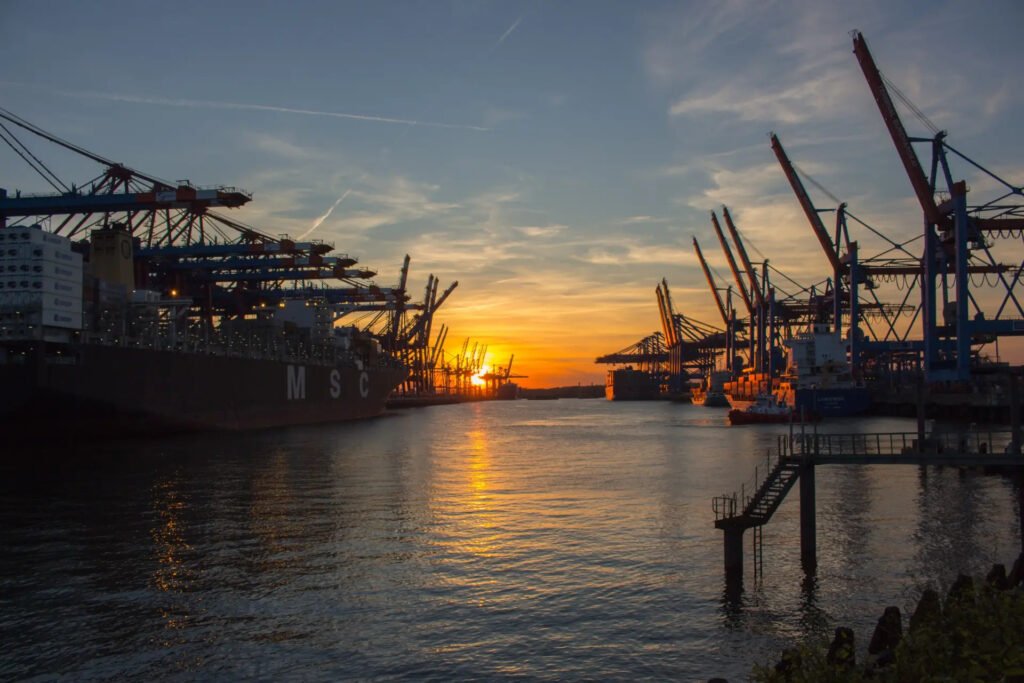
Active Vessel Traffic Management
A pioneering framework for managing environmental impacts and safety in high-traffic corridors.
Protocol Type
AVTM Standard v2.0
Nationally Adopted
Marine Atlantic Inc.
Challenges
Operational audit and fleet deployment optimization to reduce fuel consumption and increase vessel uptime.
Strategy
Achieved historical highs in customer satisfaction and a significant reduction in per-voyage operating costs.
Outcome
Reduced fuel costs and improved vessel uptime through optimized operations, leading to higher customer satisfaction and more efficient, reliable service delivery.
Active Vessel Traffic Management
A pioneering framework for managing environmental impacts and safety in high-traffic corridors.
Protocol Type
AVTM Standard v2.0
Nationally Adopted
Let's Talk
Have a business challenge you'd like to explore?
We bring global best practices and deep operational expertise to every engagement — working alongside your team to integrate world-class solutions with the realities of your supply chain and maritime operations.
Reach out for a complimentary 60-minute conversation. No obligation — just clarity.